
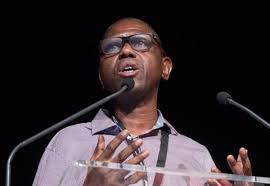
The Chairman and Information Commissioner of the Right to Access Information Commission (RAIC), Dr. Ibrahim Seaga Shaw, has underscored the critical importance of data-driven decision-making in national development. He made this statement while delivering the keynote address as Guest Speaker at the National Evidence Summit (NES) held at the Bintumani
Conference Center in Aberdeen, Freetown.
In his keynote address, Dr. Shaw emphasized that decision-making not grounded in data or credible evidence amounts to guesswork, which cannot produce sustainable or meaningful outcomes. He noted that in an increasingly complex and rapidly evolving world, countries can only effectively confront emerging challenges and seize opportunities when equipped with accurate data and guided by evidence-based interventions.
Highlighting Sierra Leone’s commitment to strengthening its evidence ecosystem, Dr. Shaw referenced the enactment of the Right to Access Information Act of 2013, which established the
Right to Access Information Commission (RAIC) to facilitate public access to information held by public authorities. He described access to information as not only a fundamental human right recognized by national, regional, and international legal frameworks, but also as the foundation for accountability, transparency, and effective governance.
He further noted that Sustainable Development Goal (SDG) 16.10.2 specifically focuses on ensuring public access to information, with UNESCO providing global oversight.
He also referenced international platforms such as the International Conference of Information Commissioners (ICIC) and the African Network of Information Commissioners (ANIC), which advance the global access to information agenda. In this regard, Dr. Shaw announced that Sierra Leone will host the 17th edition of ICIC back-to-back with the Global UNESCO IDUAI conference; only the second time in history that an African country will host the prestigious global conference.
Dr. Shaw explained that RAIC’s mandate includes ensuring compliance with both reactive and proactive disclosures by public institutions. Reactive disclosure requires institutions to respond to formal information requests, while proactive disclosure mandates the publication of at least 22 categories of information without citizens having to request them. The Act empowers the Commission to assess compliance and impose sanctions where institutions default.
Providing an overview of progress made under his leadership since late 2018, Dr. Shaw revealed that the Commission has recorded an unprecedented increase in information requests nationwide, rising from only a handful before 2019 to thousands annually. In 2023 alone, over 19,000 information requests were processed and successfully provided to citizens. He noted that
international benchmarks, including the MCC Scorecard, UNESCO surveys, and assessments by the Canadian Centre for Law and Democracy, reflect Sierra Leone’s remarkable progress in access to information.
As part of modernization efforts, he explained that the Commission has developed and integrated a digital platform on its website to complement the traditional paper-based system, thereby improving efficiency, transparency, and accessibility. Dr. Shaw also disclosed ongoing collaboration between RAIC and Sabi Salone, an initiative of the Institute for Development, aimed at fostering strong public-private partnerships to improve structured access to public documents and strengthen Sierra Leone’s evidence ecosystem.
He concluded by reaffirming that under the Right to Access Information Act, every person has the legal right to request information from public institutions, which are mandated by law to respond within stipulated timelines.
Also speaking at the Summit, Regina Mamidy Yillah, Founder and Chief Executive Officer of the Institute for Development, delivered a compelling presentation on the theme “What It
Takes to Make Evidence Use Routine in Sierra Leone – A Shared Direction Built Through Practice.”
She emphasized that institutionalizing evidence use requires more than policy declarations-it demands consistent practice, leadership commitment, investment in data systems, and a culture shift across public institutions.
According to her, making evidence use routine means embedding data collection, analysis, and feedback mechanisms into everyday government processes, planning cycles, and service delivery frameworks.
Ms. Yillah stressed the need for sustained collaboration between government institutions, civil society, academia, and the private sector to build a resilient evidence ecosystem. She noted that when evidence becomes a shared national asset produced, accessed, and applied collectively it strengthens accountability, improves public service delivery, and enhances citizen trust in
governance.
The National Evidence Summit brought together policymakers, development partners, civil society actors, researchers, and private sector stakeholders to reflect on strengthening Sierra
Leone’s culture of evidence-informed policymaking and inclusive development.
For media inquiries, contact:
David Patrick Kamara Manager, Public Information and Communications Right to Access Information Commission (RAIC) National Secretariat +23278407847
Email: davidpatk@yahoo.co.uk


